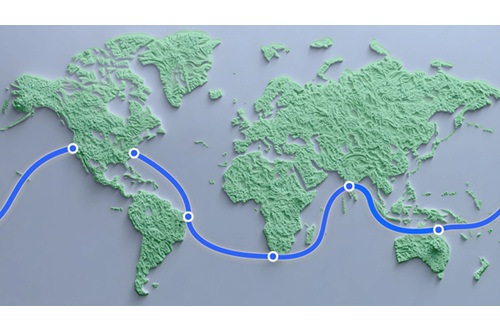
New US Regulations Splinter Global Submarine Cable Connectivity
 By Miao Beilei, Global Times
July 9, 2026
The US Federal Communications Commission (FCC) recently adopted the second Report and Order on submarine cable rules, marking another major step in regulating submarine line terminal equipment following its comprehensive overhaul of submarine cable rules in August 2025. The new framework can be characterized as accelerated deregulation at home and a kind of “small yard, high fence” abroad.
Companies that certify compliance with the FCC's highest national security standards and agree to ongoing US oversight can qualify for a streamlined “fast-track” approval process. “Trusted” operators such as Google, Meta and SubCom stand to benefit from these expedited procedures. By contrast, companies on the FCC's Covered List or those controlled by a “foreign adversary” are required to submit written disclosures and are subject to heightened scrutiny and a presumption of denial.
Ignoring the realities of global industrial division of labor, the US is using unilateral regulation to forcibly cut apart mature global submarine cable industrial and supply chains, replacing market rules with political intervention.
For Global South countries, the range of available procurement channels for submarine cable terminal equipment is being narrowed. If they choose equipment that Washington labels as high-risk or linked to “foreign adversaries,” they may find it difficult to connect to landing points under US control. If they choose equipment from the US and its allies, they must bear high procurement, operation and maintenance costs, sharply raising the cost of building cross-border digital infrastructure and further deepening the Global North-South digital divide.
Meanwhile, the US is extending its regulatory reach to terminal facilities on other countries' territory, while retaining the right to intervene afterward through “continuous monitoring” clauses. This poses a serious challenge to the digital sovereignty of developing countries.
For global telecommunications and internet-related market entities, the global submarine cable industrial and supply chains are being cut apart and divided. Companies can no longer freely select equipment and build networks based on cost-effectiveness and stability. Operating costs for all kinds of international digital businesses would rise significantly, and the efficiency of global digital economic development would face sustained impact.

news via inbox
Sign up to get the latest updates straight to your inbox!