UNH Deploys Appledore Cabled Ocean Observatory
 Beth Potier, University of New Hampshire
August 31, 2026
The University of New Hampshire and its partners have deployed a cabled ocean observing system near the Isles of Shoals, adding a real-time research platform for the coastal Gulf of Maine off New Hampshire. The system sits 10 miles offshore and three miles east of Appledore Island. UNH says the deployment gives this region real-time transmission from a package of acoustic and oceanographic instruments for the first time, creating a new coastal monitoring capability.
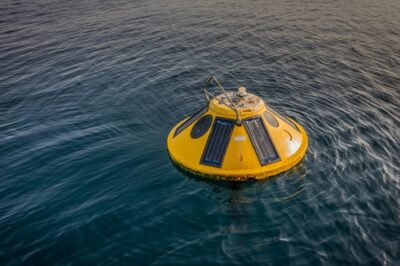
The project received a $6.2 million grant from the Office of Naval Research. Its architecture combines an underwater platform carrying 10 sensors, solar and data acquisition equipment on Appledore Island, and a subsea cable between those two elements. Hydrophones and a 200 kHz echosounder lead the instrument package, which also records video and measures pH, temperature, salinity, oxygen, currents and chlorophyll. A fish-tag receiver will send its detections into the Ocean Tracking Network.
SubCom donated and installed the cable, while JASCO Applied Sciences designed the Underwater Listening System platform. Shoals Marine Laboratory, operated by UNH and Cornell University on Appledore, hosts the data acquisition system. UNH expects the observatory to capture human and marine mammal activity, wind, precipitation, sea ice dynamics, and oceanographic features. The university links those measurements to national security, energy development, commercial fisheries, and a broader understanding of Gulf of Maine processes.
The system extends the Acoustic and Environmental Observation Network in the NW Atlantic, which is also led by Jennifer Miksis-Olds. AEON uses five landers covering offshore Gulf of Maine waters from Cape Cod toward the Bay of Fundy and east into Georges Bank, while the new platform fills a coastal gap. The confirmed status is deployed. The next stated operating step is public access, with data to be made available through a dedicated website. Researchers expect the combination of continuous acoustics and environmental measurements to support work across marine ecology, fisheries, energy and security. UNH also intends the observations to be openly accessible, extending value beyond the university and its immediate partners.

news via inbox
Sign up to get the latest updates straight to your inbox!